
Back to School: Managing Stress and Exhaustion
Emotional Health, Back to School, Stress, Nervous System, High Performers
Back to School...Back to Survival? Why Everyone Feels Exhausted Before the Season Even Begins
Before the first bell rings, many of us already feel like we’ve run an emotional marathon. This isn’t just about school supplies and schedules—it’s about our nervous systems quietly slipping into survival mode while we’re busy trying to “do it all.”
The August Scene We All Recognize
It’s mid-August. Alarm clocks are being reprogrammed after a brief summer truce. The dining table has quietly transformed into a staging area: supply lists, highlighters, laptops, sports forms, fee notices, and that one missing signature you swear you already sent. Vacations are ending—not with a clean stop, but with a slow slide into earlier bedtimes, tighter mornings, and inboxes that suddenly feel louder.
If you’re a parent, educator, administrator, student, or leader, you might notice the same pattern every year: even before the first day of school, you’re already tired. You’re organizing, planning, responding, volunteering, and “just handling it.” From the outside, you look impressive. On the inside, you might feel like you’re running on fumes—and bracing for impact.
Maybe You’re Not Just Busy—Your Nervous System Is in Survival Mode
As a senior software engineer, I’m used to thinking in systems. When a system suddenly starts consuming more CPU, I don’t blame the processor—I look for what changed. August is exactly that: a massive context switch for your nervous system. New routines, new expectations, new unknowns. Your body doesn’t just see “back to school;” it sees change, and change often feels like risk.
That quiet exhaustion you feel before the season starts might not be a time-management failure. It may be your nervous system shifting into survival mode—trying to protect you from overwhelm by pushing you into high alert, high output, and high responsibility. In code terms, it’s like your system silently switching from normal_mode to survival_mode without asking your permission.
class NervousSystem:
    def __init__(self):
        self.mode = "rest"
        self.load = 0

    def add_change(self, intensity: int) -> None:
        self.load += intensity
        if self.load >= 10:
            self.mode = "survival"

    def status(self) -> str:
        return f"mode={self.mode}, load={self.load}"


august = NervousSystem()
august.add_change(intensity=4)   # new routines
august.add_change(intensity=3)   # new expectations
august.add_change(intensity=4)   # hidden emotional load

print(august.status())
# mode=survival, load=11
Why August Feels So Different: Change Is a Load, Not Just a Date
August is a transition month. Even if you love fresh notebooks and new beginnings, your nervous system still has to process:
Earlier alarms and tighter schedules (less rest, more demand)
New classrooms, teams, bosses, or responsibilities (more uncertainty)
Unfinished grief from last year (losses, burnout, conflict)
Change amplifies whatever is already there. If you finished last year depleted, August doesn’t reset you—it often exposes how tired you still are. For high performers, that exhaustion rarely shows up as collapse. It shows up as even more doing.

Survival mode often hides behind color-coded calendars and impressive productivity.
Survival Mode Often Looks Like High Productivity, Not Panic
We imagine “survival mode” as meltdown, chaos, or obvious crisis. But for many high-performing professionals, parents, educators, and leaders, survival mode looks deceptively polished:
Staying late to “get ahead” every night
Volunteering for one more committee, club, or project
Saying “I’ve got it” before you’ve checked if you actually do
On the outside, it looks like responsibility. On the inside, it may be your nervous system trying to stay safe by keeping you busy enough not to feel your fear, grief, or fatigue. Panic isn’t the only sign of distress. Sometimes productivity is protection.
📌 Key Takeaway: High output can be a coping strategy, not a sign that you’re okay.
Busy Happiness™: When Productivity Becomes Protection
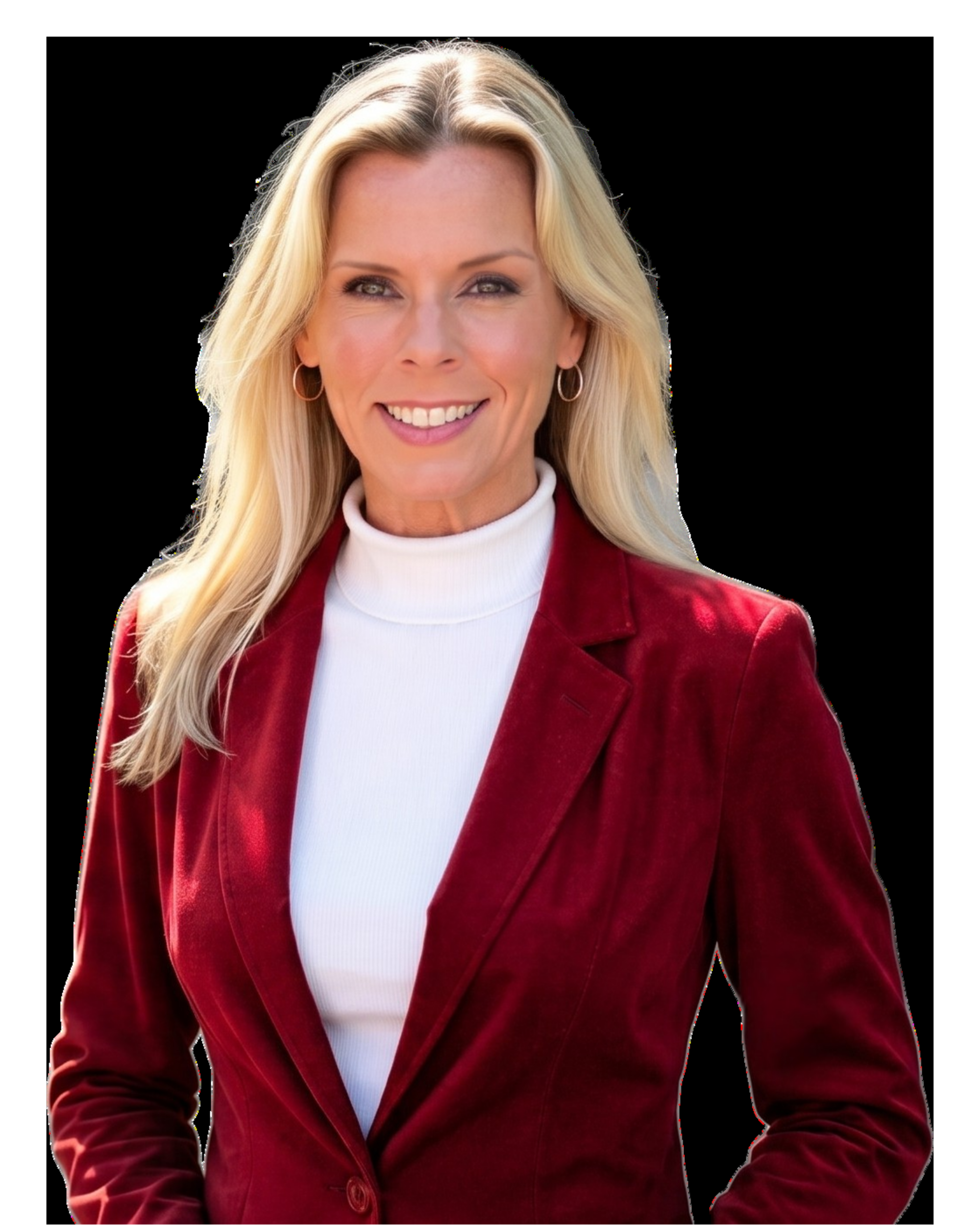
Karen Michelle, a speaker, educator, counselor, and life coach, uses a phrase that lands deeply with high performers: Busy Happiness™. It’s that polished, productive version of you that knows how to smile, deliver, and achieve—especially when you’re hurting. It’s the part of you that says, “If I can just keep everything running, I’ll be okay.”
Busy Happiness™ isn’t fake; it’s protective. It’s your nervous system using busyness as armor. The question isn’t, “Am I doing a lot?” The question is, “Is my productivity a choice—or a shield?” In code, it’s like a background process that keeps spinning so the system doesn’t have to idle and face what’s really happening.
def busy_happiness(tasks: list[str], fear_level: int) -> list[str]:
    """Return tasks we accept automatically when fear is high."""
    accepted = []
    for task in tasks:
        if fear_level >= 7:
            # auto-accept to feel safe, needed, in control
            accepted.append(task)
        else:
            # decide more intentionally
            if "priority" in task:
                accepted.append(task)
    return accepted
Are Your “Good” Coping Behaviors Intentional—or Automatic?
Our culture rewards certain coping behaviors so strongly that we rarely question them. Staying late? Dedicated. Volunteering for the extra event? A team player. Taking on the emotional load for your family, classroom, or team? A hero. But Karen Michelle invites high performers to ask a deeper question:
“Is this choice coming from my values—or from my fear?”
Many socially rewarded behaviors are actually automatic survival responses. We say yes before we’ve even checked in with ourselves. We over-function so we don’t have to feel our own needs. The world applauds, but our bodies keep the score.
💡 Pro Tip: If your “yes” arrives faster than your breath, it might be automatic, not intentional.
High Functioning Doesn’t Always Mean Healing
In tech, a system can be “up” and still be unhealthy—memory leaks, high CPU, constant restarts. It’s technically running, but it’s not well. People are the same. You can be high-functioning, high-achieving, and highly respected while your nervous system is quietly burning out.
Trauma isn’t just the event; it’s how your nervous system responds long after the event is over. It’s the way your body still braces, still over-functions, still says “I’ll handle it” because it doesn’t fully believe you’re safe yet. Healing isn’t measured by how much you can carry. It’s measured by how gently you can treat yourself while you carry what matters.
A Pre–Back-to-School Reflection Exercise
Before the season fully starts, pause—just for a few minutes. You don’t need a journal, just honesty. Consider these questions:
When I think about this fall, am I more excited or anxious? Notice where you feel that in your body—tight chest, shallow breath, clenched jaw, or maybe a lightness and openness.
Does my current schedule reflect my real priorities? If a stranger only saw your calendar, what would they think matters most to you? Does that match your heart?
Where am I already tired—before we’ve even begun? That’s not weakness; it’s data. Your nervous system is telling you something.
reflection = {
    "emotion": "anxious",      # or "excited", "numb"
    "body_signal": "tight_chest",
    "schedule_matches_values": False,
}

if not reflection["schedule_matches_values"]:
    print("Time to refactor the fall schedule, not just endure it.")
Three Simple Ways to Prepare Your Nervous System (Not Just Your Schedule)
1. Protect Margin
Margin is not laziness; it’s capacity. Just like a reliable system needs buffer memory and CPU headroom, your nervous system needs unscheduled space to downshift. This might look like:
One evening a week with no meetings, practices, or obligations
A slower start on Saturday or Sunday that you fiercely protect
def protect_margin(schedule: list[str]) -> list[str]:
    """Block margin by reserving at least one 'EMPTY' slot per day."""
    updated = []
    for day in schedule:
        if "EMPTY" not in day:
            updated.append(day + " | EMPTY")
        else:
            updated.append(day)
    return updated
2. Regulate Before Reacting
When an email, request, or conflict hits, your nervous system spikes first and thinks later. Instead of responding from that spike, build a tiny “cooldown” step. Three slow breaths. A short walk. A sip of water before you reply or commit. This is not weakness; it’s nervous system hygiene.
def regulate_before_reacting(trigger: str) -> str:
    print("Trigger received:", trigger)
    print("Pause. Inhale 4, hold 4, exhale 6.")
    # simulate regulation step
    return "respond_from_calm"
3. Notice Automatic Yeses
For the next two weeks, treat every request as a chance to observe your nervous system. Do you say “yes” before you’ve even felt your body? Before you’ve checked your calendar? Before you’ve asked if you want to? You don’t have to start saying “no” to everything. Start by noticing when your yes is automatic instead of aligned.
def consider_request(request: str, auto_mode: bool) -> str:
    if auto_mode:
        return "YES (automatic)"
    return "I need to check and get back to you."
Preparing Your Nervous System Matters More Than Perfect Plans
You can color-code every calendar, pack every lunch, and still feel like you’re drowning by October if your nervous system never had a chance to breathe. Schedules matter—but they are only as kind as the nervous system that has to live inside them. High functioning without healing eventually collapses. Healing, on the other hand, makes room for you to be human, not just helpful.
As Karen Michelle’s work reminds high performers, educators, parents, and leaders: you deserve more than Busy Happiness™. You deserve a life where your productivity flows from peace, not panic. Where your yes comes from alignment, not fear. Where back-to-school doesn’t have to mean back to survival.
One Habit to Leave Behind This Fall
Before you step fully into this new season, ask yourself gently:
“What is one habit of survival I’m ready to leave behind this fall?”
Saying yes before you’ve checked in with your body?
Filling every evening so you don’t have to sit with your feelings?
Measuring your worth by how much you carry for everyone else?
You don’t have to rewrite everything. Start with one habit. One margin block. One regulated breath before you react. One intentional no. That’s how systems heal—one small, consistent refactor at a time.
If you’re ready to go deeper, explore tools like Karen Michelle’s stress diagnostics, workshops, or speaking engagements that help high performers move from survival mode to authentic living. You’re not a machine to be optimized; you’re a human who deserves to feel safe, connected, and fully alive this fall.